
Introduction
Cleanrooms are controlled environments where even the smallest particle can compromise product quality, safety, or research accuracy. One of the essential tools supporting contamination control is the Static Pass Box. This device plays a simple but critical role in ensuring that materials can be moved from one area to another without allowing outside contaminants to enter the cleanroom.
This article explains the meaning of a Static Pass Box, how it works, and its top 5 benefits, written in a completely unique and SEO-friendly manner.
What Is a Static Pass Box?
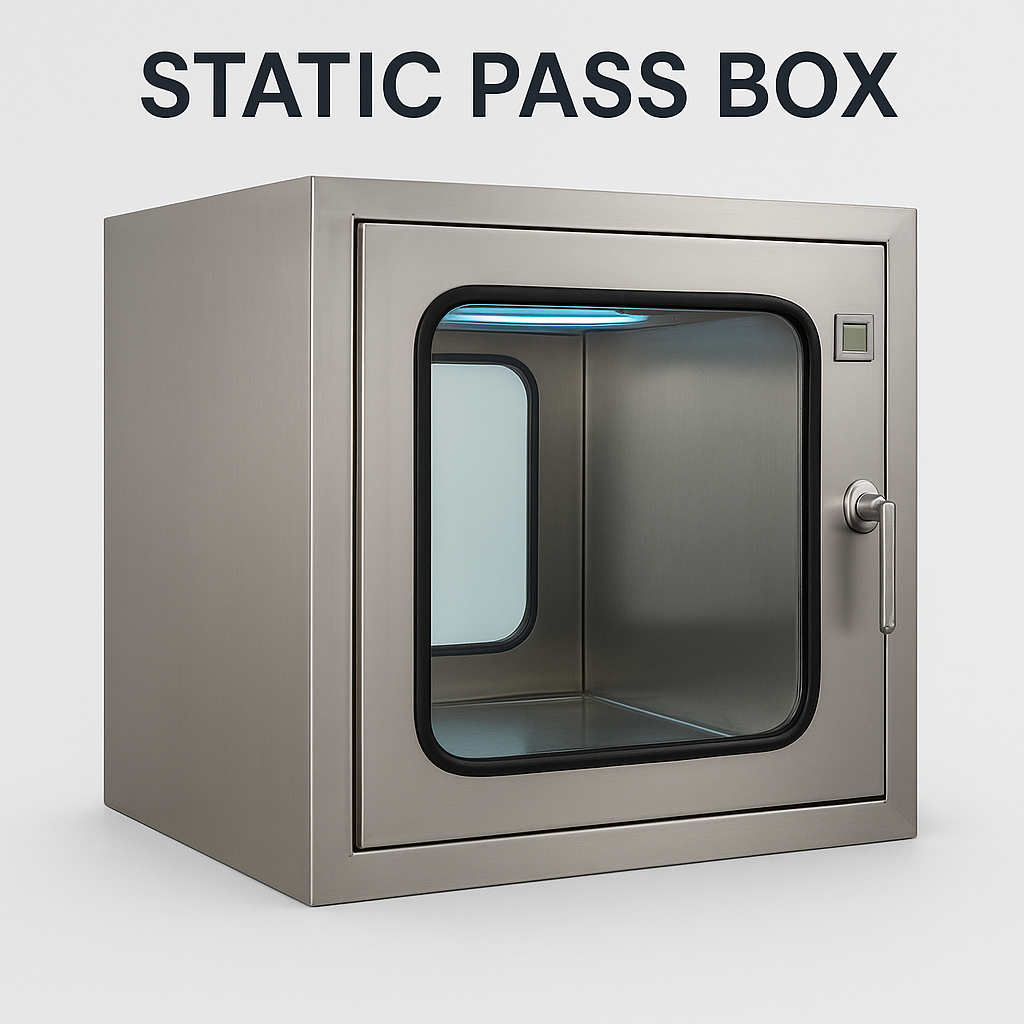
A Static Pass Box is a cleanroom transfer chamber designed for material movement between two environments of different cleanliness levels. It helps minimise particle transfer and prevents contaminants from entering controlled areas.
Unlike a dynamic pass box, a static pass box does not contain:
- HEPA filters
- Blower systems
- Forced air circulation system
This makes it ideal for transferring non-sensitive materials where still-air transfer is acceptable.
How Does a Static Pass Box Work?
The working principle of a Static Pass Box is based on an interlocking door mechanism. This mechanism ensures that only one door opens at a time, preventing dirty air from entering the clean side.
Step-by-Step Working
- Materials are placed inside the chamber from the less-clean area.
- Once the first door is closed, the interlocking system activates.
- The opposite door can now be opened safely from the cleanroom side.
- The cleanroom operator removes the items without affecting the room air pressure or airflow.
- An optional UV light can disinfect items before they are retrieved.
The controlled door mechanism keeps the cleanroom protected from dust, microorganisms, and other airborne particles.
Construction and Design of Static Pass Box
Static Pass Boxes are designed with durable and hygienic materials suitable for sterile environments.
Standard Design Features:
- Stainless steel SS304 or SS316 grade
- Smooth, polished internal surfaces
- Heavy-duty hinges and robust doors
- Clear glass viewing window
- LED indicators for door status
- Mechanical or electromagnetic interlocking system
- Optional UV safety light
- Gasket sealing for an airtight closure
These features make the Static Pass Box reliable, easy to clean, and long-lasting.
Where Is a Static Pass Box Used?
Static Pass Boxes are used across multiple industries that demand contamination control and strict material movement regulations.
Common Applications:
- Pharmaceutical cleanrooms
- Biotechnology labs
- Microbiology laboratories
- Medical device manufacturing
- Semiconductor & microelectronics units
- Chemical research labs
- Food and beverage production units
- Cosmetic manufacturing plants
Top 5 Benefits of Using a Static Pass Box
1. Reduces Contamination Risks
The interlocking mechanism prevents both doors from opening at the same time, blocking unfiltered air from entering clean areas. This significantly reduces cross-contamination during material transfer.
2. Improves Cleanroom Efficiency
By minimizing the need for people to enter and exit the cleanroom frequently, the pass box helps maintain stable airflow, temperature, and particle levels. This improves overall cleanroom workflow.
3. Cost-Effective Material Transfer Solution
Since a Static Pass Box does not require filters, blowers, or complex electrical systems, it is a more affordable option. It also has very low maintenance needs, making it a long-term cost-efficient solution.
4. Durable and Long-Lasting
Made from high-quality stainless steel, these units are resistant to corrosion, chemicals, and frequent cleaning. This makes them ideal for rigorous industrial environments.
5. Easy to Install and Customize
Static Pass Boxes can be wall-mounted, floor-mounted, or customized to specific dimensions. Optional features such as UV lights, electromagnetic locks, and double-wall construction can be added based on cleanroom requirements.
Static Pass Box vs Dynamic Pass Box
Although similar in purpose, both types serve different needs.
| Feature | Static Pass Box | Dynamic Pass Box |
|---|---|---|
| Airflow | No filtered airflow | HEPA-filtered airflow |
| Suitable For | Non-critical materials | Sterile or sensitive materials |
| Price | More economical | Higher cost |
| Maintenance | Very low | Moderate |
| Installation | Simple | Requires power and airflow setup |
This comparison helps cleanroom planners select the correct equipment based on their process requirements.
Types of Static Pass Boxes
Although static pass boxes have a simple working mechanism, they come in different designs based on application:
1. Wall-Mounted Static Pass Box
Installed in cleanroom walls to transfer materials between areas of different cleanliness.
2. Floor-Mounted Static Pass Box
Used for transferring larger or heavier materials.
3. Tabletop Static Pass Box
Ideal for small labs, R&D units, and compact cleanrooms.
Installation Requirements for Static Pass Box
To ensure proper performance, a Static Pass Box must be installed properly.
Key Installation Guidelines:
- Install between two rooms with a controlled difference in cleanliness levels
- Ensure airtight sealing around the mounting area
- Maintain correct interlocking operation
- Position the pass box at ergonomic height for ease of access
- Avoid vibration-prone areas
- Connect the optional UV light to a safe power supply
Proper installation ensures cleanroom compliance and safe working operations.
Maintenance Tips for Static Pass Boxes
Static Pass Boxes require very minimal maintenance.
Recommended Maintenance Practices:
- Clean surfaces with disinfectants daily
- Check the interlocking system weekly
- Inspect UV light functionality (if installed)
- Lubricate hinges periodically
- Ensure gasket seals are intact
- Perform integrity checks regularly
Following these steps ensures long-term reliability.
Why Should You Choose a Static Pass Box?
A Static Pass Box is ideal if:
- You need a cost-effective cleanroom transfer device
- You transfer general, non-critical materials
- You want long-term reliability with minimal maintenance
- Your cleanrooms operate under similar cleanliness levels
It is a perfect choice for pharmaceutical cleanrooms, research labs, hospitals, and manufacturing units.
Conclusion
A Static Pass Box is an essential cleanroom accessory used to prevent contamination and ensure smooth material transfer between controlled environments. With its simple design, high durability, and low maintenance, it is widely used across pharmaceutical, biotech, and industrial cleanrooms.
By understanding its features, working, applications, and benefits, industries can select the right pass box that meets their cleanliness and regulatory requirements.